When the work is moving, but the numbers that matter aren't.

ETW helps leadership teams turn coordinated effort into compounding business value. One member took his business from a $1.7 million valuation to nearly $49 million in 22 months.

Built by Lee Benson$0 → $100M+ Operator22-Month Case · $1.7M → $49M

ETW is built on the operating experience of Lee Benson, the operator who took Able Aerospace from zero to more than $100 million in annual revenue and a mid-nine-figure exit over a 20-year run.

That scale came from the discipline of doing the work, not from studying methodology. Across the run, Able developed more than 10,000 repairs, and fewer than 100 of them drove about 80% of revenue. That asymmetry is the lesson ETW works from: most leadership effort doesn't move what matters. The right effort moves almost everything.

When the work is moving but the value isn't, it's usually the same pattern — effort applied to the wrong layer of the business.

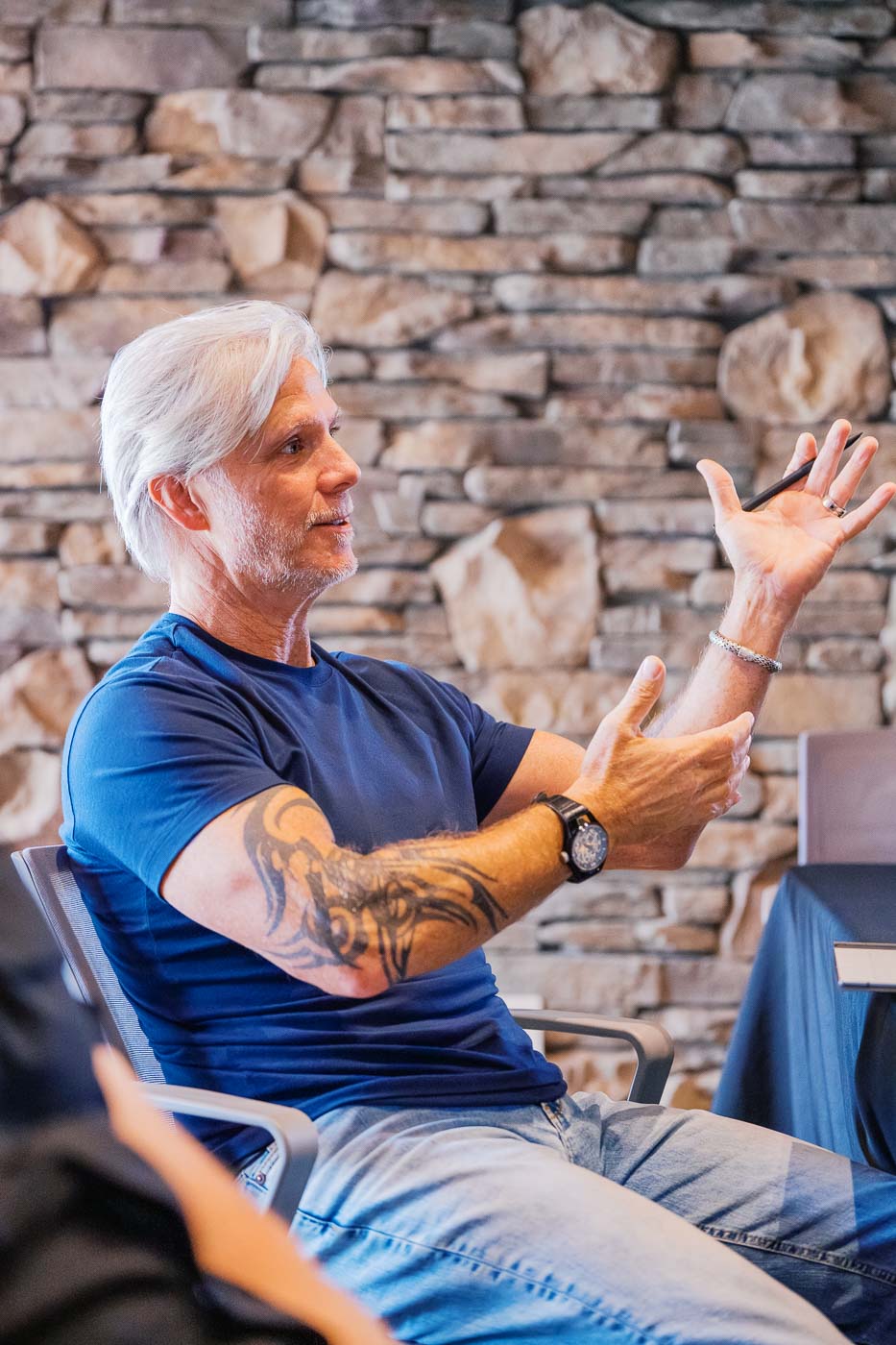
Lee Benson, founder of ETW and former operator of Able Aerospace
Lee Benson — Founder, ETW

Where execution usually breaks down.

Select the cards that feel true to you.

00/ 06
Nothing flagged. Keep the bar where it is.
The Discipline

Not an Effort Problem.

What leadership teams call an execution problem is rarely a shortage of effort. The team is working, often very hard. The mechanics underneath the work are what's missing or out of sync.

ETW gives leadership teams a complete operating discipline — not a workshop, not a content library, and not generic peer advisory. The discipline shows up in five places.

With all five, leadership effort compounds into business value. Without them, the team works against itself.

  1. 01

    Focus

    The team agrees on the one number that matters most this year, and the work that moves it.

  2. 02

    Visibility

    Progress on that number, and on the work behind it, is visible enough for the team to act without waiting for the CEO.

  3. 03

    Operating Rhythm

    Meetings, decisions, and follow-through that keep priorities moving instead of getting revisited.

  4. 04

    Ownership

    The right work is owned by the right person, and that owner has the authority to move it.

  5. 05

    Leadership Behavior

    What the leadership team rewards, tolerates, and challenges reinforces the system instead of undermining it.

Find the Right Path

Four pathways. Each addresses a different layer of the same operating problem.

EXECUTE CEO MasterMIND
Flagship · 01

EXECUTE CEO MasterMIND

When the CEO needs a sharper room for the calls only they can make.

EXECUTE MasterMIND is the peer advisory room for CEOs running calls only they can make. Eight non-competing CEOs. One full working day each month at Lee's studio in Phoenix. Lee facilitates every session personally. In the room: members open their entire P&L, run a structured operating discipline that surfaces what's blocking value creation, and leave with operating tools built live during the deep dive. Lee's recurring frame for how peers challenge each other: “If your retirement was invested with this person's business, what would you be asking?” Members who stop bringing real challenges or following through get asked to leave. That's the floor. One member took his business from a $1.7 million valuation to nearly $49 million in 22 months.

Explore EXECUTE
Leading for Value
Pathway 02

Leading for Value

When the leadership team needs to reset alignment around what creates value.

Leading for Value is a private working session for leadership teams that need to cut through noise, sharpen priorities, and change what the team acts on. The session surfaces what creates value, what drains it, and what needs to move. Leaders leave with clearer ownership of the work that matters.

Explore Leading for Value
MIND Management System
Pathway 03

MIND Management System

When the business needs a stronger rhythm for ownership and execution.

When priorities drift, ownership blurs, and reminders replace accountability, the business needs a stronger rhythm, not more meetings. MIND gives leadership teams a practical system for defining the one outcome that matters most, identifying what drives it, assigning visible ownership, and reviewing progress in a way that keeps the right work moving.

Explore MIND
Leadership Value Lab
Pathway 04

Leadership Value Lab

When leaders need practical support applying stronger management habits in real work, not a content library or a separate training track.

Leadership Value Lab gives leaders a structured place to bring live situations: real people, real decisions, real tradeoffs. Live working sessions with Lee Benson build stronger management practices in context, not theory.

Explore the Lab

Not sure which fits?

Executive Alignment Diagnostic

See where execution is most likely breaking down.

Alignment, ownership, decision quality, operating rhythm, or follow-through.

Diagnostic preview

Does your leadership team agree on the top three priorities?

1234

Is ownership clear for each critical outcome?

1234

Do meetings produce decisions or just updates?

1234

Is progress reviewed with the right frequency?

1234

Does accountability follow through to results?

1234

Is there a gap between what is agreed and what is shipped?

1234

Does your leadership team agree on the top three priorities?

1234

Is ownership clear for each critical outcome?

1234

Do meetings produce decisions or just updates?

1234

Is progress reviewed with the right frequency?

1234

Does accountability follow through to results?

1234

Is there a gap between what is agreed and what is shipped?

1234
Take the Diagnostic
ETW Flagship Executive Briefing

The operating case for why effort and value diverge — and what it takes to close the gap.

Understand why busy leadership teams often struggle to convert effort into measurable business value.

Briefing preview

01

At the top, it sounds settled. In the business, it isn't.

Most leadership teams losing momentum aren't losing it on effort. They're losing it on alignment they don't yet know they're missing.

02

Leadership teams confuse agreement with alignment.

Agreement in the room doesn't survive contact with the business. Real alignment shows up in what happens next.

03

The problem is rarely a lack of effort.

Strong people in weak systems produce activity. Strong people in strong systems produce compounding value.

04

The cost is real, and it's almost always underestimated.

Decisions take longer. Execution gets less consistent. The cost rarely shows up as one obvious failure.

"Well, when you look at it this way, it's just a math problem we can solve."

Lee Benson's recurring move when a CEO walks in carrying a problem they've been wrestling with privately for months.

05

Before you blame the team, look at the system.

When execution is uneven, the easy conclusion is that the team isn't focused enough. That's usually the wrong place to start.

06

From an operator who built this from the ground up.

Lee built Able Aerospace from zero to more than $100 million in annual revenue and a mid-nine-figure exit.

07

What stronger execution actually requires

Stronger execution doesn't come from more pressure. It comes from a small set of operating conditions a business either has or doesn't.

01

At the top, it sounds settled. In the business, it isn't.

Most leadership teams losing momentum aren't losing it on effort. They're losing it on alignment they don't yet know they're missing.

02

Leadership teams confuse agreement with alignment.

Agreement in the room doesn't survive contact with the business. Real alignment shows up in what happens next.

03

The problem is rarely a lack of effort.

Strong people in weak systems produce activity. Strong people in strong systems produce compounding value.

04

The cost is real, and it's almost always underestimated.

Decisions take longer. Execution gets less consistent. The cost rarely shows up as one obvious failure.

"Well, when you look at it this way, it's just a math problem we can solve."

Lee Benson's recurring move when a CEO walks in carrying a problem they've been wrestling with privately for months.

05

Before you blame the team, look at the system.

When execution is uneven, the easy conclusion is that the team isn't focused enough. That's usually the wrong place to start.

06

From an operator who built this from the ground up.

Lee built Able Aerospace from zero to more than $100 million in annual revenue and a mid-nine-figure exit.

07

What stronger execution actually requires

Stronger execution doesn't come from more pressure. It comes from a small set of operating conditions a business either has or doesn't.

Read the Briefing

How this Works in Practice

Each pathway meets the operating problem at a different moment of leadership work.

The same operator-built discipline runs underneath all four.

Diagnose where value is stuck.

Step 01

Diagnose where value is stuck.

Most leadership teams disagree about where execution is breaking down. The structured diagnostic settles it. It maps where value is stuck across alignment, ownership, decision quality, and follow-through, and points to the pathway that fits. The team starts from a shared, specific read instead of five competing opinions.

Take the Diagnostic
Lee Benson

Operator

20-year run

Outcome

9-figure exit

Studio

Phoenix, AZ

Lee Benson

Built on Operator Experience.

The operator behind ETW is Lee Benson. The discipline ETW builds with leadership teams is the one he ran Able Aerospace on.

Able created an entirely new category, engineering aerospace repair processes the industry had written off as impossible. More than 100 competitors followed. Able stayed ahead of all of them.

Lee was also never satisfied with a number. Able's average aircraft turn time was 28 days when Lee saw a path to 14. Competitors couldn't believe Able was completing in 30 days the repairs that took industry peers three months.

That's the approach ETW brings into leadership-team work: operate against the current shape of the problem, then keep raising the bar.

The Book

New to Lee's work?
Start here.

Read Your Most Important Number to understand the MIND framework that transformed Lee's businesses and hundreds of others.

Your Most Important Number by Lee Benson

FAQ

Common Questions

Your Next Step.

The gap is usually smaller than it looks. A focused conversation can surface where execution is getting stuck — and which path matches your situation.

A focused conversation on your specific execution challenge — not a generic sales call.

Read the operating case for why effort and value diverge — and what it takes to close the gap. 

READ THE EXECUTIVE BRIEFING